
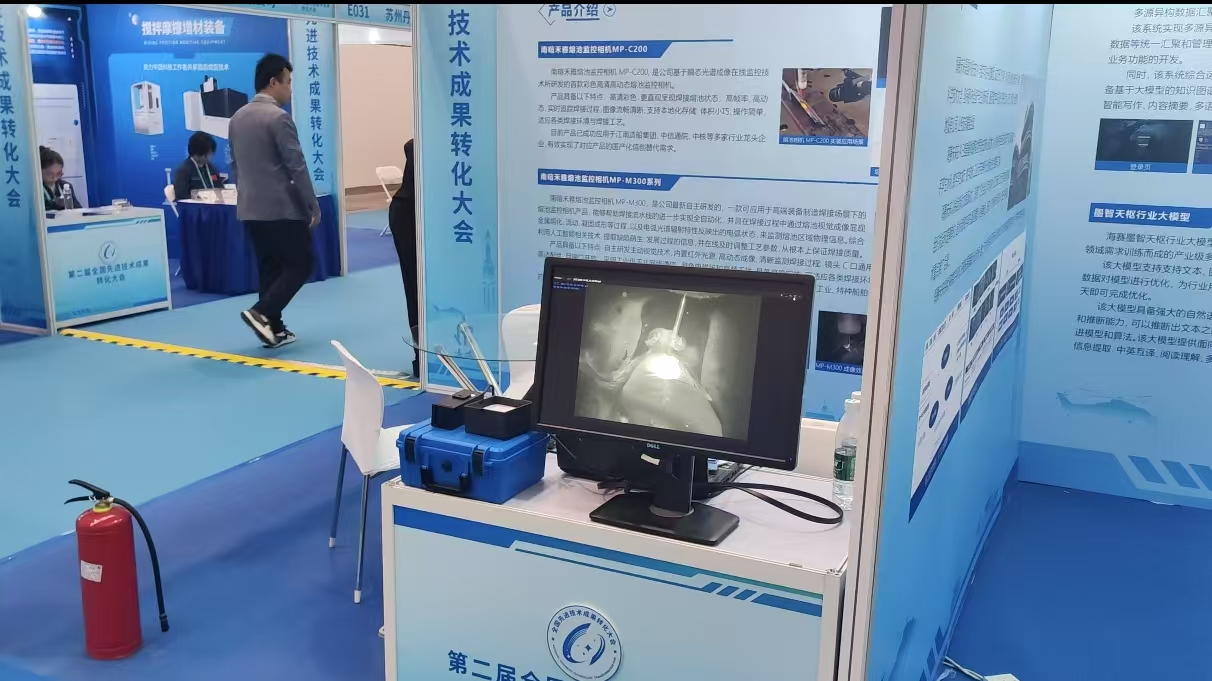
In today’s competitive manufacturing environment, maintaining consistent welding quality has become one of the most important challenges for industrial companies. As products become more complex and quality standards continue to increase, manufacturers need reliable methods to monitor and control welding processes. Welding Process Monitoring technology provides an effective solution by allowing companies to observe welding conditions, analyze process changes, and improve production reliability.
Welding plays a critical role in many industries, including automotive manufacturing, aerospace, energy equipment, construction machinery, and metal fabrication. The quality of welding directly affects product strength, safety, and durability. However, welding is a complex process influenced by many factors, including material properties, welding parameters, operator skills, and environmental conditions. Without effective monitoring, small problems may lead to product defects and increased production costs.
Traditional welding inspection methods usually focus on checking finished products after welding. Although post-welding inspection can identify some defects, it cannot always explain when or why problems occurred during the welding process. By introducing advanced Welding Process Monitoring technology, manufacturers can observe welding conditions in real-time and obtain valuable information throughout the production process.
A professional welding monitoring camera allows engineers to capture important welding details, such as arc behavior, molten pool changes, welding position, and process stability. This visual information helps manufacturers understand the actual welding situation and make timely adjustments when abnormal conditions appear. real-time monitoring reduces the risk of defective products and improves overall production efficiency.
One of the key benefits of welding process monitoring is improving Welding Quality Control. In industries where welding reliability is extremely important, maintaining stable production quality is essential. A welding monitoring system provides continuous observation and helps companies establish more accurate quality management processes. By recording and analyzing welding images, manufacturers can also create valuable production data for future optimization.
For automated production lines, welding monitoring technology becomes even more important. Modern factories are increasingly adopting robotic welding equipment to improve efficiency and reduce labor costs. However, automated systems still require visual feedback to ensure accurate operation. A reliable welding monitoring camera provides the information needed for better control, helping robots and welding equipment achieve more stable performance.
NXHY develops professional welding vision solutions for industrial customers worldwide. The company provides various welding camera products, including direct-view welding cameras, software-controlled welding cameras, and Ethernet welding camera systems. These solutions are designed to support different application requirements, from basic welding observation to advanced industrial integration.
Another advantage of welding process monitoring is improving production traceability. In many industries, manufacturers need to record production information and ensure every product meets quality requirements. By saving welding videos and monitoring data, companies can review production processes, analyze potential issues, and provide stronger quality assurance for customers.
As manufacturing moves toward Industry 4.0, intelligent monitoring technology will become increasingly important. The combination of welding cameras, artificial intelligence, automation systems, and data analysis will help manufacturers achieve smarter and more efficient production management.
NXHY is committed to providing reliable Industrial Welding Inspection and welding vision solutions for global customers. Through advanced imaging technology and professional technical support, NXHY helps manufacturers improve welding quality, reduce production risks, and build more intelligent manufacturing systems.