
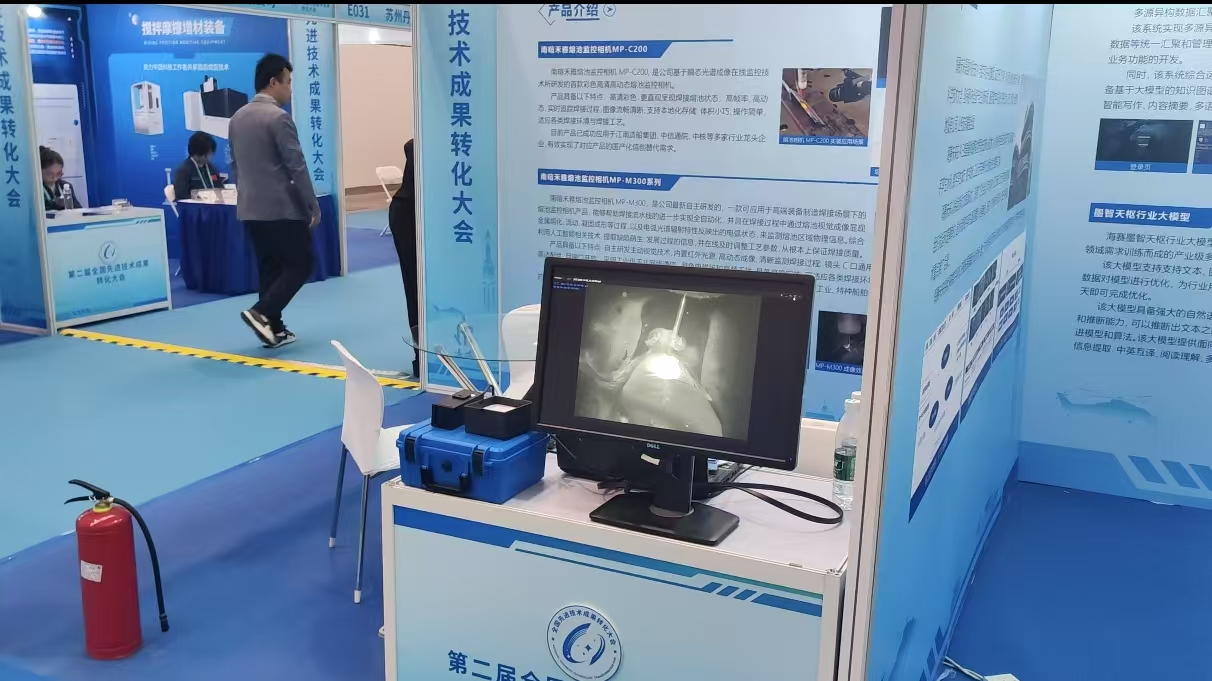
With the rapid development of smart manufacturing, robotic welding has become an important technology for improving production efficiency, consistency, and product quality. However, modern robotic welding systems require more than mechanical movement. To achieve higher accuracy and flexibility, robots need advanced visual feedback technology. A professional robotic welding camera provides real-time visual information that helps welding robots better understand the welding environment and improve overall production performance.
Traditional robotic welding systems usually operate based on pre-programmed parameters. Although this method works well in stable production environments, it may face challenges when welding conditions change. Variations in workpiece position, material characteristics, welding parameters, and environmental conditions can affect welding results. By integrating a Robot welding vision system, manufacturers can provide robots with real-time visual feedback and improve the adaptability of automated welding processes.
A high-performance robotic welding camera allows engineers to monitor critical welding information, including arc conditions, molten pool behavior, welding position, and process changes. This visual data helps automation systems achieve better control and enables operators to identify potential problems before they affect final product quality.
The combination of welding cameras and robotics is becoming a key trend in welding automation. In modern factories, robotic welding equipment is expected to operate continuously with minimal human intervention. However, without accurate visual monitoring, robots may not be able to respond effectively to unexpected changes during welding. A welding vision system provides the necessary information for improving positioning accuracy, process stability, and production reliability.
One of the major advantages of a Robot welding vision system is improving welding accuracy. During automated welding, even a small deviation between the welding torch and the weld seam can influence product quality. By using camera-based visual monitoring, manufacturers can observe welding conditions in real-time and make adjustments when necessary. This helps reduce welding defects, improve product consistency, and increase production efficiency.
NXHY provides professional welding vision solutions for robotic welding and industrial automation applications. The company develops different types of welding cameras, including direct-view welding cameras, software-controlled welding cameras, and Ethernet welding camera systems. These products are designed to support various automation requirements and help customers build more intelligent welding production lines.
For robot manufacturers and automation integrators, flexibility and integration capability are important factors when selecting welding vision equipment. NXHY welding cameras support software control and secondary development, allowing customers to customize solutions according to their specific application requirements. This makes NXHY products suitable for different robotic welding systems and industrial automation projects.
In addition to improving welding accuracy, welding cameras also help companies reduce production costs. Automated visual monitoring reduces dependence on manual inspection, decreases production interruptions, and improves the efficiency of quality management. By collecting welding images and process information, manufacturers can analyze production performance and continuously optimize their welding systems.
The future of welding automation will continue to rely on intelligent technologies such as artificial intelligence, machine vision, and industrial data analysis. The integration of welding cameras with robotic systems will enable factories to achieve higher levels of automation and smarter production management.
NXHY is committed to developing advanced welding vision system solutions for global customers. Through innovative imaging technology, reliable products, and professional technical support, NXHY helps manufacturers improve robotic welding performance and move toward intelligent manufacturing.